


Indiana Paystub Generator - 2.95% State Tax Plus 92 County Taxes, Reciprocal Agreements
Last updated: | ePaystubs Editorial Team
Indiana payroll looks simple on the surface. Flat 2.95% state income tax. One of the lowest flat rates in the country. But then you hit the part nobody warns you about: every single one of Indiana's 92 counties charges its own income tax on top of that state rate. And the county tax isn't based on where you work. It's based on where you live. So two people at the same desk in the same downtown Indianapolis office can take home different amounts if one lives in Marion County and the other lives across the county line in Hamilton County. For a take-home-pay estimate, use our Indiana paycheck calculator.
A few paystub tools online still show the wrong state rate for 2026 (some show 3.05% or 3.15%, both outdated). And almost none of them handle the county tax piece correctly. Our Indiana paystub generator uses the current 2.95% state rate from the Indiana DOR's Departmental Notice #1, applies the correct county rate based on your residential county, and calculates all federal deductions automatically. Takes about two minutes. No signup. Preview your pay stub before checkout.
Works for hourly and salaried employees, contractors, and small business owners across Indianapolis, Fort Wayne, Evansville, South Bend, Lafayette, and all 92 Indiana counties.
| State Income Tax | 2.95% flat (down from 3.05% in 2024, per IN DOR Departmental Notice #1) |
| County Income Tax | ALL 92 counties levy their own tax, 0.5% to 3.38%. Based on where you LIVE. |
| Combined Rate Range | About 3.45% (lowest counties) to 6.33% (Pulaski County, highest) |
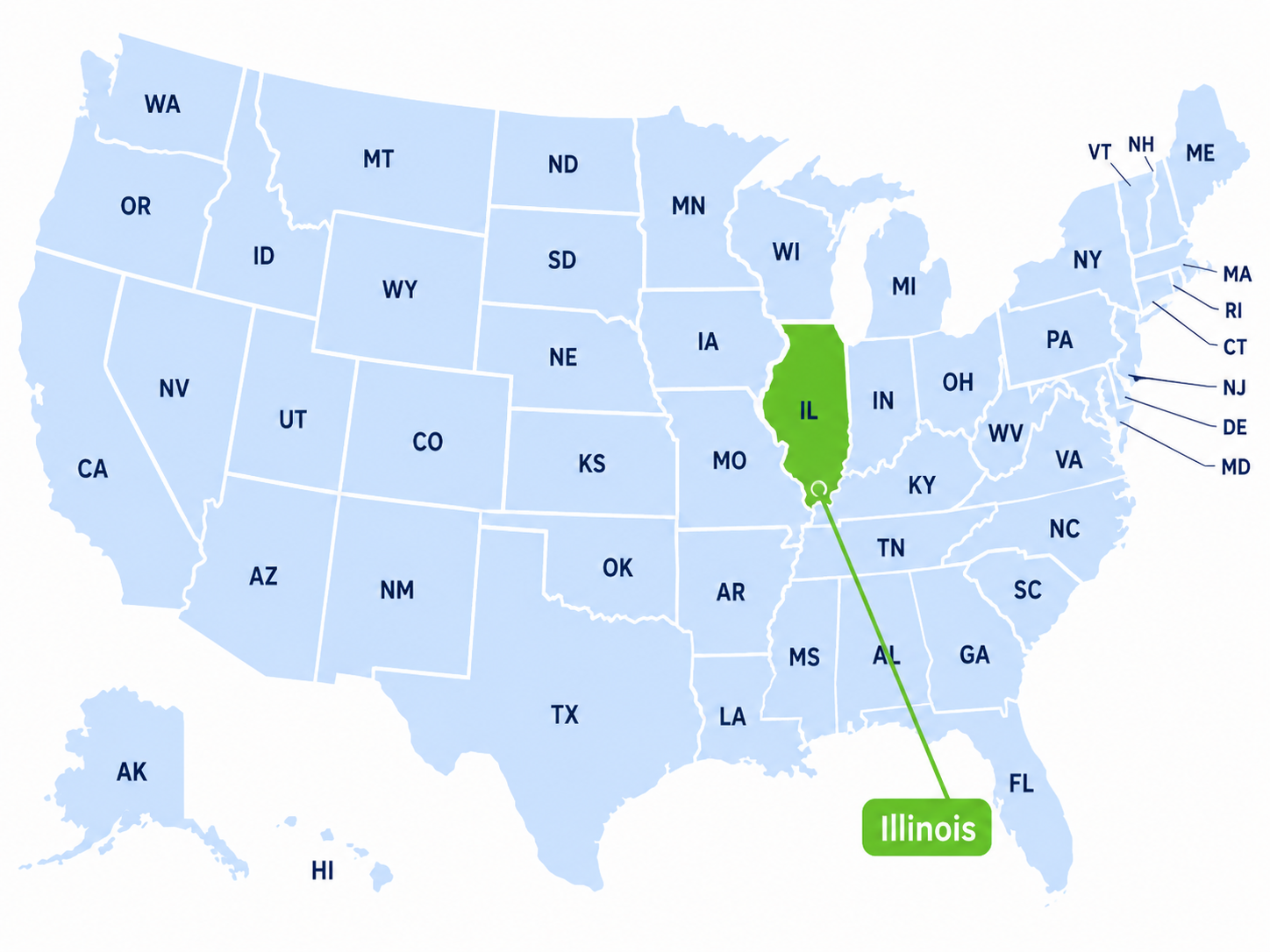
| Reciprocal Agreements | KY, MI, OH, PA, WI (Form WH-47). Illinois NOT included. |
| Minimum Wage | $7.25/hr (federal FLSA floor, no state minimum above it) |
| Pay Stub Required? | Yes. Itemized statements, semi-monthly minimum frequency. |
| Withholding Form | Form WH-4 (includes County Status section for county determination) |
| State SDI/PFL | None. Indiana has no disability insurance or paid family leave deduction. |
| Personal Exemption | $1,000 per exemption + $1,500 per dependent |
"I manage payroll for a manufacturing company with employees in Marion, Hamilton, Hendricks, and Johnson counties. Four different county rates on every pay run. This tool was the first one I found that actually applied each county rate correctly instead of just using a flat state number."
"Needed stubs for a car loan application in Fort Wayne. The Allen County tax showed up correctly, the numbers matched what I actually take home, and the whole thing took maybe four minutes."
92 Counties, 92 Different Tax Rates: Indiana's Most Distinctive Payroll Feature
This is what makes Indiana different from almost every other state. Every county in Indiana charges its own income tax on top of the state's 2.95% flat rate. Not some counties. All 92 of them. The rates range from roughly 0.5% in the lowest-tax counties to 3.38% in Pulaski County (the highest). And the tax is calculated based on where the employee lives, not where they clock in.
That last part is the piece that catches people off guard. In Alabama, local occupational taxes are based on where you work. In Indiana, county taxes follow your home address. A worker who lives in Carmel (Hamilton County, about 1.0%) and commutes to an office in downtown Indianapolis (Marion County, about 2.02%) pays Hamilton County's rate, not Marion County's. Their coworker who lives in Indianapolis pays the Marion County rate. Same cubicle. Different checks.
Here are the county rates for the 20 most-searched Indiana counties, sourced from the Indiana DOR's Departmental Notice #1, effective January 1, 2026:
| County | Major Cities | County Rate | Combined (State + County) |
|---|---|---|---|
| Marion | Indianapolis | ~2.02% | ~4.97% |
| Hamilton | Carmel, Fishers, Noblesville, Westfield | ~1.00% | ~3.95% |
| Allen | Fort Wayne | ~1.48% | ~4.43% |
| Lake | Gary, Hammond, Crown Point, Munster | ~1.50% | ~4.45% |
| St. Joseph | South Bend, Mishawaka, Granger | ~1.75% | ~4.70% |
| Tippecanoe | Lafayette, West Lafayette (Purdue) | ~1.34% | ~4.29% |
| Monroe | Bloomington (Indiana University) | ~1.345% | ~4.295% |
| Vanderburgh | Evansville | ~1.35% | ~4.30% |
| Elkhart | Elkhart, Goshen | ~2.00% | ~4.95% |
| Johnson | Greenwood, Franklin | ~1.00% | ~3.95% |
| Hendricks | Brownsburg, Avon, Plainfield | ~1.50% | ~4.45% |
| Hancock | Greenfield | ~1.50% | ~4.45% |
| Howard | Kokomo | ~2.65% | ~5.60% |
| Madison | Anderson | ~2.35% | ~5.30% |
| Delaware | Muncie | ~1.75% | ~4.70% |
| Bartholomew | Columbus (Cummins HQ) | ~1.00% | ~3.95% |
| Vigo | Terre Haute | ~1.78% | ~4.73% |
| Wayne | Richmond | ~1.75% | ~4.70% |
| Adams | Decatur, Berne | ~3.08% | ~6.03% |
| Pulaski | Winamac | ~3.38% | ~6.33% (highest in Indiana) |
The range here is striking. A worker in Hamilton County (combined ~3.95%) and a worker in Pulaski County (combined ~6.33%) both live in the same state, but one pays 60% more in state and county income tax than the other. On a $60,000 salary, that's roughly a $1,400 per year difference in take-home pay based entirely on which county you call home.
County rates are updated by the Indiana DOR in January and October each year via Departmental Notice #1. The rates above are effective January 1, 2026. Your employer determines your county from the residential address on your Form WH-4. If you move to a different county during the year, your county rate doesn't change until the following January 1.
Indiana's 2.95% State Rate for 2026 (And Why So Many Tools Still Show the Wrong Number)
Indiana has been quietly cutting its flat income tax rate for six straight years. The current 2026 rate is 2.95%, confirmed by the Indiana Department of Revenue's Departmental Notice #1. But a bunch of online calculators and paystub tools haven't kept up. Some show 3.05% (the 2024 rate). Others show 3.15% (the 2023 rate). One even shows 3.0% (the 2025 rate). If the tool you're using calculates your Indiana tax at anything other than 2.95%, it's working with old data.
| Tax Year | State Rate | Change |
|---|---|---|
| 2022 | 3.23% | Starting point for the reduction schedule |
| 2023 | 3.15% | -0.08% |
| 2024 | 3.05% | -0.10% |
| 2025 | 3.00% | -0.05% |
| 2026 | 2.95% | -0.05% (current) |
| 2027 | 2.90% | -0.05% (scheduled) |
Six consecutive years of pre-legislated rate cuts. By the time the schedule completes in 2027, Indiana will have dropped its flat rate by 0.33 percentage points, from 3.23% down to 2.90%. That's roughly a 10% reduction in the state income tax rate over six years. It's not the dramatic story Idaho has (7.4% down to 5.3%), but it's steady, deliberate, and still in progress.
Combined with the county layer, the total effective rate for most Indiana workers lands between 3.95% (Hamilton, Johnson, Bartholomew counties) and 5.60% (Howard County). That's competitive with neighboring Ohio (which also has complex local taxes) and significantly lower than Illinois (4.95% flat with no scheduled cuts).
What Gets Taken Out of an Indiana Paycheck: Marion County vs. Hamilton County at the Same Job
Because Indiana's county tax is based on residence, the best way to show what it means in real dollars is to compare two workers at the same company earning the same wage, one living in Marion County and the other in Hamilton County. The only thing different is which side of the county line they go home to at night.
Marion County (Indianapolis) Resident, $28/hr, Biweekly
Setup: Marcus works at a logistics company near downtown Indianapolis. He earns $28/hr, biweekly, 80 hours, files Single on Form WH-4. He lives in Marion County.
| Line Item | Amount |
|---|---|
| Gross Pay (80 hrs x $28.00) | $2,240.00 |
| Federal Income Tax (per IRS Pub. 15) | - $252.00 |
| Social Security, 6.2% (per IRS Topic 751) | - $138.88 |
| Medicare, 1.45% | - $32.48 |
| Indiana State Tax, 2.95% (per IN DOR) | - $66.08 |
| Marion County Tax, ~2.02% | - $45.25 |
| Estimated Net Pay | About $1,705 |
Hamilton County (Carmel) Resident at the SAME Job, $28/hr, Biweekly
Setup: Same company, same salary, same hours, same filing status. But Priya lives in Carmel (Hamilton County), which has a lower county rate.
| Line Item | Amount |
|---|---|
| Gross Pay (80 hrs x $28.00) | $2,240.00 |
| Federal Income Tax | - $252.00 |
| Social Security, 6.2% | - $138.88 |
| Medicare, 1.45% | - $32.48 |
| Indiana State Tax, 2.95% | - $66.08 |
| Hamilton County Tax, ~1.00% | - $22.40 |
| Estimated Net Pay | About $1,728 |
The Hamilton County worker takes home $23 more per biweekly check. Over a full year, that's $598. Same employer. Same salary. Same state. Different county of residence. And if Marcus moved to Howard County (Kokomo, about 2.65% county rate), his county tax line would jump to $59.36 per check, and he'd lose an additional $365 per year compared to living in Marion County.
This is why knowing your county rate matters in Indiana more than in almost any other state. The state rate is just the starting point. The county rate is where the real variation happens.
Estimates based on 2026 rates. Actual amounts depend on Form WH-4 exemptions and voluntary deductions. Use the generator for your exact numbers.
County Tax Is Based on Where You LIVE, Not Where You Work
This is the part that confuses people who've lived in other states with local taxes. In Alabama, local occupational taxes are based on where you work. If your office is in Birmingham, you pay the Birmingham rate regardless of where you live. In New York City, if you work within the five boroughs, you pay NYC tax even if you live in New Jersey.
Indiana flips it. Your county tax is determined by your county of residence. Where your office sits doesn't matter at all. Your employer figures this out from the residential address you write on Form WH-4 (Indiana Employee's Withholding Exemption and County Status Certificate). The WH-4 has a specific "County Status" section where you enter your county code. That code determines your rate.
A few things worth knowing about how this works in practice:
Your county is determined as of January 1 of the tax year. If you move from Marion County to Hamilton County in March, your county rate doesn't change until the following January 1. You file an updated WH-4 with your employer, but the new rate takes effect at the start of the next calendar year.
An employer with workers living in multiple counties must withhold different county rates for each employee. A small business in downtown Indianapolis might have employees in Marion, Hamilton, Hendricks, Johnson, and Hancock counties, each with a different rate. That's five county calculations per pay run on top of the state calculation.
Our generator asks for the employee's county of residence. You pick it from a dropdown, and the tool applies the correct 2026 county rate from Departmental Notice #1 automatically.
Reciprocal Agreements With 5 States (And Why Illinois Is NOT on the List)
Indiana has reciprocal tax agreements with five neighboring states. If you live in one of these states and work in Indiana, you can file Form WH-47 with your Indiana employer. That form exempts you from Indiana state and county withholding, so your employer withholds only your home state's tax instead.
| State | Reciprocal? | What It Means |
|---|---|---|
| Kentucky | Yes | KY residents working in IN file WH-47, pay KY tax only |
| Michigan | Yes | MI residents working in IN file WH-47, pay MI tax only |
| Ohio | Yes | OH residents working in IN file WH-47, pay OH tax only |
| Pennsylvania | Yes | PA residents working in IN file WH-47, pay PA tax only |
| Wisconsin | Yes | WI residents working in IN file WH-47, pay WI tax only |
| Illinois | No | IL residents working in IN have Indiana tax withheld, must file in both states |
| All other states | No | Indiana tax withheld, file in both states and claim credit |
The Illinois omission is the one that trips up the most people. Hundreds of thousands of workers commute between Northwest Indiana (Gary, Hammond, Crown Point, Valparaiso, Munster) and the Chicago metro area. Because Illinois and Indiana have no reciprocal agreement, these commuters can't simply file a WH-47 and be done with it. An Indiana resident working in Chicago has Illinois tax withheld. An Illinois resident working in Gary has Indiana state and county tax withheld. Both groups file in both states and claim credits to avoid double taxation, but the withholding on the stub reflects the work state, which means the check looks different from what a reciprocal agreement would produce.
Indiana Payroll Requirements 2026: What Every Employer Needs to Know
Indiana payroll has two layers most states don't: the county tax system and the reciprocal agreements. Beyond those, the compliance picture is pretty simple. No state disability insurance. No state paid family leave. A flat state rate. Here's the full reference.
| Requirement | What Indiana Requires | Official Source |
|---|---|---|
| Pay stub mandate | Yes. Itemized wage statements required each pay period. | Indiana DOR / Indiana Code |
| Pay frequency | At least semi-monthly. Executive/admin may be paid monthly. | Indiana Code |
| State income tax | 2.95% flat (effective Jan 1, 2026) | IN DOR Departmental Notice #1 |
| County income tax | All 92 counties, 0.5% to 3.38%, based on employee residence | IN DOR Departmental Notice #1 |
| Withholding form | Form WH-4 (includes County Status section) | Indiana DOR |
| Reciprocal exemption | Form WH-47 for KY, MI, OH, PA, WI residents | Indiana DOR |
| Minimum wage | $7.25/hr (federal FLSA, no state minimum above it) | Indiana DWD |
| Tipped minimum | $2.13/hr cash wage | Indiana DWD |
| Overtime | 1.5x after 40 hrs/week (FLSA) | U.S. DOL FLSA |
| State disability insurance | None | Indiana DWD |
| State paid family leave | None | Indiana DWD |
| New hire reporting | Within 20 days of hire | Indiana DWD |
Indiana SUI (State Unemployment Insurance), 2026
Employer-paid only. Never appears on employee stubs. Per OnPay's Indiana payroll guide, the taxable wage base is $9,500 per employee. New employers start at 2.5%. Experienced employer rates range from 0.5% to 7.4%. Workers' compensation is also mandatory for all Indiana employers.
Form WH-4: Indiana's Withholding Form (With County Status)
Indiana's WH-4 is different from most state withholding forms because it has a dedicated section for "County Status." This is where the employee writes their county of residence and the corresponding county code. The employer uses this code to look up the county tax rate in Departmental Notice #1. If an employee moves to a different county mid-year, they file an updated WH-4, but the new county rate doesn't apply until the next January 1.
Who Uses an Indiana Paycheck Stub Generator?
Manufacturing Workers
Indiana is a top-5 manufacturing state. Eli Lilly and Company runs massive pharmaceutical operations in Indianapolis (Marion County). Cummins Inc. builds engines and power systems in Columbus (Bartholomew County). Subaru of Indiana Automotive manufactures vehicles in Lafayette (Tippecanoe County). Toyota Motor Manufacturing operates in Princeton (Gibson County). Honda Manufacturing produces cars in Greensburg (Decatur County). Steel Dynamics runs out of Fort Wayne (Allen County). Each of these operations employs thousands of hourly and salaried workers living in multiple surrounding counties. One Toyota plant in Gibson County might have employees in Gibson, Vanderburgh, Posey, and Pike counties, each with a different rate. Our generator handles all of them.
Indianapolis Tech and Professional Workers
Indianapolis has a growing tech corridor anchored by the Salesforce Tower and companies like Angi (formerly Angie's List), ExactTarget alumni ventures, and a growing startup scene. IU Health, Anthem (now Elevance Health), and OneAmerica anchor the healthcare and insurance sectors. These are salaried professionals living across Marion, Hamilton, Hendricks, Johnson, and Hancock counties, each needing stubs that reflect their specific county rate.
Cross-State Commuters
Workers who live in Kentucky, Michigan, Ohio, Pennsylvania, or Wisconsin and commute into Indiana can file Form WH-47 for reciprocal exemption. Workers who live in Illinois and commute to Northwest Indiana (or vice versa) don't have that option and need stubs that reflect the withholding for whichever state they work in. Our generator handles both reciprocal and non-reciprocal scenarios based on residence and work state.
University Town Workers
Indiana University (Bloomington, Monroe County), Purdue University (West Lafayette, Tippecanoe County), Ball State (Muncie, Delaware County), Notre Dame (South Bend, St. Joseph County). College towns across Indiana employ thousands of academic staff, support workers, graduate assistants, and part-time employees. Each town sits in a different county with a different tax rate. Graduate students and adjuncts who need income documentation for housing are a common use case.
Small Business Owners
A body shop in Kokomo (Howard County, 2.65%). A restaurant in Evansville (Vanderburgh County, 1.35%). A dental practice in Noblesville (Hamilton County, 1.0%). A construction crew in Terre Haute (Vigo County, 1.78%). Small businesses across Indiana need accurate pay stubs that reflect both the state and county rates for each employee. Our pay stub generator asks for the employee's county of residence and applies the right rate from Departmental Notice #1 automatically.
Contractors and Freelancers
Indiana's growing freelance economy spans construction, technology, healthcare consulting, and creative services. When it's time for a lease application in the Indianapolis metro or a loan pre-approval from an Indiana credit union, a clean pay stub with the correct state and county deductions is what the other side expects to see. Self-employed workers carry the full 15.3% FICA self-employment tax per IRS rules.
How to Create an Indiana Pay Stub Online: 3 Steps
Indiana has the county layer that most states don't, but you don't have to figure it out yourself. Pick your county from the dropdown and the tool handles the rest.
-
Enter company and employee info
Business name, address, employee name, address, pay period dates, pay date. Select the employee's county of residence from the dropdown. This is what determines the county tax rate, not where the office is located. -
Enter earnings and deductions
Hourly rate or salary, hours worked, overtime if applicable. Add voluntary deductions like health insurance or 401(k). The tool applies the 2.95% Indiana state rate plus the correct county rate from Departmental Notice #1 and all federal deductions automatically. -
Preview, then download
Review every line. Gross pay, five deduction lines (federal, SS, Medicare, Indiana state, county), voluntary deductions, net pay, YTD totals. When it looks right, pay and download the PDF.
When You Need an Indiana Pay Stub as Proof of Income
Renting in Indianapolis, Fort Wayne, or Anywhere in Indiana
Indianapolis rental prices have climbed steadily since 2020, especially in the Broad Ripple, Mass Ave, and Fountain Square neighborhoods. Landlords want two to three recent stubs showing gross monthly income of 2.5 to 3 times the rent. Stubs should correctly show both state and county deductions since Indiana landlords are familiar with seeing both lines.
Auto Loans
Indiana lenders like Indiana Members Credit Union, Teachers Credit Union, and Centier Bank ask for recent pay stubs during auto loan applications. Having documentation with the correct county deduction line helps avoid processing questions.
Mortgage Applications
Mortgage lenders want your two most recent stubs plus W-2s and bank statements. Indiana's housing market is still affordable compared to coastal states, but the documentation requirements are the same. A stub that clearly separates state tax from county tax helps underwriters who may be less familiar with Indiana's county system.
Indiana FSSA Programs (SNAP, Medicaid)
The Indiana Family and Social Services Administration (FSSA) requires current income documentation when applying for SNAP, Healthy Indiana Plan (Medicaid), TANF, and other assistance programs through the FSSA Benefits Portal. Pay stubs are the standard accepted income document.
Indiana vs. Neighboring States: The Full 2026 Tax Comparison
| State | State Income Tax | Local Income Tax | Reciprocal with IN? | Minimum Wage |
|---|---|---|---|---|
| Indiana | 2.95% flat | All 92 counties (0.5%-3.38%) | N/A | $7.25 (federal) |
| Illinois | 4.95% flat | None | No | $15.00/hr |
| Ohio | 0% to 3.5% (progressive) | Many cities (1%-2.5%) | Yes | $10.70/hr |
| Michigan | 4.05% flat | Some cities (Detroit 2.4%) | Yes | $12.48/hr |
| Kentucky | 4.0% flat | Some counties and cities | Yes | $7.25 (federal) |
| Wisconsin | 3.5% to 7.65% (progressive) | None | Yes | $7.25 (federal) |
Indiana's 2.95% state rate is the lowest in the region. Illinois is 4.95%. Michigan is 4.05%. Kentucky is 4.0%. But Indiana's county taxes close the gap considerably. A Marion County resident's combined 4.97% is actually comparable to Illinois' 4.95% (which has no local tax). The real advantage shows up in lower-county areas like Hamilton, Johnson, and Bartholomew (combined ~3.95%), which are actually cheaper than any neighboring state's effective rate.
The reciprocal agreements add another layer. If you live in Ohio and work in Fort Wayne, you pay Ohio's tax and Indiana leaves you alone (Form WH-47). But if you live in Illinois and work in Hammond, both states want a piece of your paycheck, and sorting it out happens at tax filing time, not on the stub.
Common Questions About Indiana Pay Stubs
What is Indiana's income tax rate for 2026?
2.95% flat on all taxable income. This is confirmed by the Indiana DOR's Departmental Notice #1, effective January 1, 2026. It's down from 3.05% in 2024, 3.0% in 2025, and is scheduled to drop to 2.90% in 2027. Some online tools still show 3.05% or 3.15%. Both are outdated. On top of the 2.95%, all 92 Indiana counties charge their own income tax.
Does Indiana have county income tax?
Yes, and this is what makes Indiana payroll unique. All 92 counties levy their own income tax. Rates range from about 0.5% to 3.38% (Pulaski County). The tax is based on where the employee lives, not where they work. Marion County (Indianapolis) charges about 2.02%. Hamilton County (Carmel, Fishers) charges about 1.0%. Your employer determines your county from your residential address on Form WH-4.
Is county tax based on where I live or where I work?
Where you live. This is the opposite of how local taxes work in states like Alabama (where it's based on workplace). Two workers at the same Indianapolis office can have different county tax rates if they live in different counties. Your county is determined as of January 1 of the tax year and doesn't change mid-year even if you move.
Does Indiana have reciprocal tax agreements?
Yes, with five states: Kentucky, Michigan, Ohio, Pennsylvania, and Wisconsin. Residents of these states working in Indiana can file Form WH-47 to be exempt from Indiana withholding. They pay tax only to their home state. The big surprise here is that Illinois is NOT included, which affects hundreds of thousands of Northwest Indiana/Chicago commuters.
What is Indiana minimum wage in 2026?
$7.25 per hour. Indiana has no state minimum wage above the federal FLSA floor. Tipped employees receive $2.13/hr cash minimum. Indiana is one of the few states that has never enacted its own higher minimum wage.
How much gets taken out of an Indiana paycheck?
For a Marion County (Indianapolis) worker earning $28/hr biweekly (80 hours, $2,240 gross), filing Single: federal tax takes about $252, Social Security 6.2% takes $138.88, Medicare 1.45% takes $32.48, Indiana state tax at 2.95% takes $66.08, and Marion County tax at about 2.02% takes $45.25. That's roughly $535 total, leaving about $1,705 net. A Hamilton County resident at the same job keeps roughly $23 more per check ($598/year more) because Hamilton County's rate is lower.
Does Indiana require pay stubs?
Yes. Indiana employers must provide itemized wage statements showing hours, rates, deductions, and net pay. Pay frequency must be at least semi-monthly. Employers use Form WH-4 to determine both state and county withholding. The WH-4 has a dedicated "County Status" section where the employee enters their county of residence.
Official Sources Referenced on This Page
Every tax rate, county rate, and compliance rule cited here comes from official Indiana and federal government sources.
- Indiana Department of Revenue Departmental Notice #1 is the primary source for the 2.95% state income tax rate and all 92 county income tax rates effective January 1, 2026. The notice is updated in January and October each year.
- Indiana Department of Revenue covers Form WH-4, Form WH-47, state withholding tables, county tax rules, and employer filing requirements.
- Indiana Department of Workforce Development covers the $7.25 minimum wage, unemployment insurance rates, new hire reporting, overtime requirements, and workers compensation rules.
- Symmetry Payroll Tax Insights explains Indiana reciprocal agreements with Kentucky, Michigan, Ohio, Pennsylvania, and Wisconsin, including the Form WH-47 process.
- Keka Indiana Paycheck Calculator verifies the 2.95% state rate for 2026, the scheduled 2.90% rate for 2027, and information from Departmental Notice #1.
- OnPay Indiana Payroll Calculator confirms the $9,500 unemployment insurance wage base, the 2.5% new employer rate, and the residence based county tax calculation.
- Indiana Family and Social Services Administration covers income verification for SNAP, the Healthy Indiana Plan, and other public assistance programs.
- IRS Topic 751 covers Social Security and Medicare withholding rates.
- Social Security Administration confirms the 2026 Social Security wage base of $184,500.
- IRS Publication 15 provides federal payroll withholding tables and employer guidance.
- United States Department of Labor FLSA covers federal overtime rules and payroll recordkeeping requirements.
Ready to Create Your Indiana Pay Stub Online?
Indiana payroll has two layers most states don't: a flat state rate that's been cut six years running, and 92 county income taxes that depend on where you live, not where you work. A few online tools still show the wrong state rate for 2026, and almost none of them handle the county tax piece correctly. Ours does both.
Preview your pay stub before checkout. No signup. State rate sourced from the Indiana DOR Departmental Notice #1. County rates updated January 2026. Federal calculations per IRS.