


California Paystub Generator (2026)
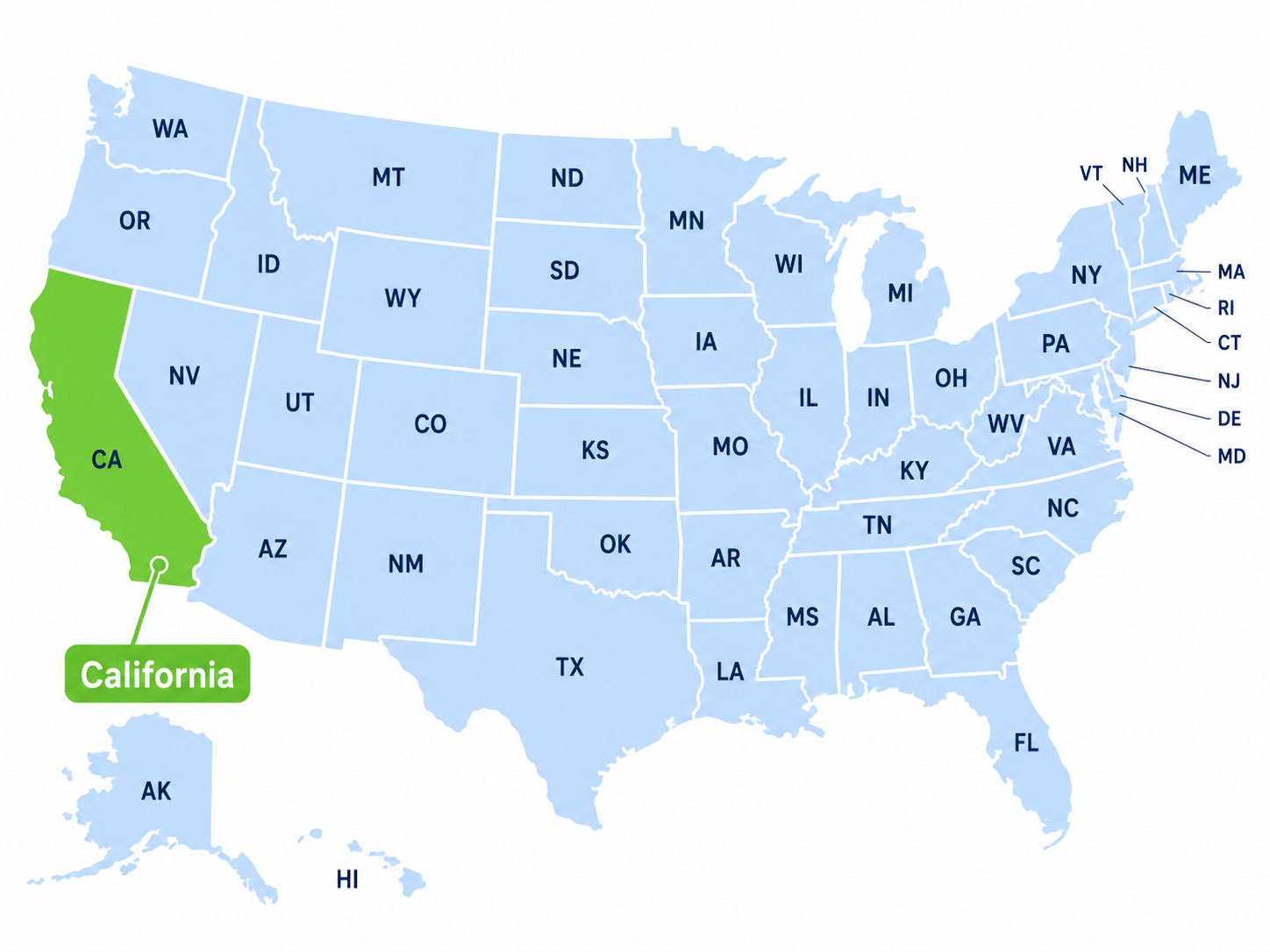
California paychecks are the most complicated in the country. That's not opinion. It's math. Nine state income tax brackets topping out at 13.3%. A disability insurance deduction that now applies to every single dollar you earn with no ceiling. Daily overtime rules that kick in after 8 hours in a day, not just 40 in a week. A mandatory pay stub law with nine required fields and fines that can reach $4,000 per employee. Three different minimum wage tiers depending on your industry. And over 40 cities that set their own minimum wages above the state floor. For a take-home-pay estimate, use our California paycheck calculator.
California payroll can include state Personal Income Tax (PIT), State Disability Insurance (SDI), federal taxes, overtime, industry-specific wage rules, local minimum wages, and detailed wage-statement requirements. Use the California paystub generator with actual payroll data and review every figure before finalizing the document.
Works for hourly and salaried employees, tipped workers, gig workers, contractors, and small business owners across Los Angeles, San Francisco, San Diego, San Jose, Sacramento, Oakland, and the rest of California.
- Free preview before downloading
- California SDI at 1.3 percent with no wage cap
- Labor Code 226 pay stub fields included
- Daily overtime and double time guidance
- California city and industry minimum wage details
| California PIT withholding | Use the employee's DE 4 information and the 2026 EDD withholding schedules. |
| SDI | 1.3% employee withholding; no taxable wage ceiling. |
| Statewide minimum wage | $16.90 per hour effective January 1, 2026. |
| Covered fast-food employees | $20.00 per hour; coverage generally requires a qualifying limited-service restaurant chain with at least 60 establishments nationwide, subject to statutory exceptions. |
| Covered health-care employees | Higher facility-specific minimum wages apply. Several schedules changed July 1, 2026, so the applicable facility category must be checked. |
| California UI | Employer-paid. New-employer rate 3.4%; 2026 Schedule F+ experienced rates 1.5% to 6.2%; $7,000 taxable wage limit. |
| ETT | Employer-paid at 0.1% on the first $7,000. |
| Daily overtime | General rules for covered nonexempt employees include time-and-a-half after 8 hours in a workday and double time after 12, with exceptions. |
| Wage statement | California Labor Code § 226 requires an accurate itemized wage statement containing specified information. |
| Exempt salary threshold | $70,304 annually is the 2026 minimum salary component for certain white-collar exemptions; all applicable duties and other tests must also be satisfied. |
California PIT Withholding and DE 4 in 2026
California has a progressive individual income-tax system. The ordinary personal income-tax rates range from 1% through 12.3%, and an additional 1% tax applies to taxable income over $1 million, which can produce a 13.3% top marginal rate.
Those annual tax rates should not be used as a simple flat percentage on every paycheck. For payroll in 2026, California employers use the Employment Development Department's withholding schedules together with the employee's Employee's Withholding Allowance Certificate (DE 4).
EDD provides two withholding methods for 2026: Method A, Wage Bracket Table Method, and Method B, Exact Calculation Method. The employee's filing information, allowances, additional withholding, taxable wages, and payroll frequency can all affect PIT withholding.
See what SIT or SWT means on a pay stub and how taxable wages work on a pay stub.
Official sources: California EDD rates and withholding schedules and California DE 4.
California SDI Withholding in 2026
California State Disability Insurance (SDI) is an employee payroll withholding. The 2026 rate is 1.3%.
Effective January 1, 2024, California removed the SDI taxable wage ceiling. For 2026, all wages subject to California SDI are therefore subject to the 1.3% contribution rate without an annual taxable-wage cap.
For example, if an employee has $2,000 of wages subject to SDI for a pay period, the SDI withholding at 1.3% is $26.00.
The EDD reports a 2026 maximum weekly Disability Insurance benefit amount of $1,765. Eligibility and benefit calculations are separate from the payroll withholding calculation.
Official source: California EDD contribution rates.
California Paycheck Example for 2026
Consider an employee earning $25 per hour for 80 regular hours in a biweekly pay period. Gross pay is $2,000.00.
| Payroll Item | Example |
|---|---|
| Gross pay | $2,000.00 |
| Social Security | 6.2% × $2,000 = $124.00, assuming the employee remains below the annual wage base. |
| Medicare | 1.45% × $2,000 = $29.00. |
| California SDI | 1.3% × $2,000 = $26.00. |
| Federal income-tax withholding | Varies based on Form W-4 and IRS withholding rules. |
| California PIT withholding | Varies based on DE 4 information, taxable wages, payroll frequency, and the 2026 EDD withholding method. |
| Net pay | Varies because federal PIT, California PIT, benefits, garnishments, and other deductions vary. |
A single fixed federal or California PIT amount should not be presented as accurate for every employee.
See how to read a pay stub and pre-tax vs. post-tax deductions.
California Minimum Wage Rules in 2026
Statewide Minimum Wage
California's statewide minimum wage is $16.90 per hour effective January 1, 2026. It applies to employers regardless of size unless a higher industry-specific or local rate applies.
Fast-Food Minimum Wage
Covered fast-food restaurant employees must receive at least $20.00 per hour. The law generally covers qualifying limited-service restaurants that are part of a chain with at least 60 establishments nationwide, subject to statutory coverage requirements and exceptions.
Official guidance: California Fast Food Minimum Wage FAQ.
Health-Care Worker Minimum Wages
California does not have one single health-care minimum wage. Covered health-care employees are subject to facility-specific schedules. Several statutory schedules changed on July 1, 2026. Depending on the facility category, current rates can differ substantially, so employers should identify the applicable facility category before determining the wage floor.
Official guidance: California Health Care Worker Minimum Wage FAQ.
Local Minimum Wages
Cities and counties may establish minimum wages above California's statewide rate. Because local rates and effective dates can change independently, use the current rate for the location where the employee performs the work rather than relying on an older statewide comparison table.
Official statewide guidance: California minimum wage.
2026 Exempt Salary Threshold
The statewide $16.90 minimum wage makes $70,304 per year the 2026 minimum salary component for certain California executive, administrative, and professional exemptions. Meeting that salary amount alone does not make an employee exempt; the applicable duties and other legal requirements must also be met.
California Labor Code 226 Wage Statement Requirements
California Labor Code § 226 requires employers to furnish employees an accurate itemized wage statement semimonthly or at the time wages are paid. The statute identifies nine categories of information.
- Gross wages earned.
- Total hours worked, except where the statutory exception applies.
- Piece-rate units and applicable piece rate, when the employee is paid on a piece-rate basis.
- All deductions. Certain deductions made on written orders of the employee may be aggregated as allowed by the statute.
- Net wages earned.
- Inclusive dates of the pay period.
- Employee identification: the employee's name and only the last four digits of the Social Security number, or another employee identification number.
- Employer identification: the legal employer's name and address, plus additional information for a farm labor contractor when applicable.
- Applicable hourly rates and corresponding hours worked at each rate, plus temporary-services information when the statutory rule applies.
Labor Code § 226 contains statutory remedies for certain violations, but liability depends on the facts and the applicable subsection. A missing field should not be described as automatically producing a $4,000 award in every case.
A paystub generator can help organize information, but employers remain responsible for confirming that the final wage statement contains every field required for the employee and pay period.
See California Labor Commissioner payday and wage-statement guidance.
California Daily and Weekly Overtime
For most covered nonexempt employees, California's general overtime rules require 1.5 times the regular rate for hours worked over eight through 12 in a workday and for hours over 40 in a workweek.
The general rule also requires double time for hours worked over 12 in a workday. On the seventh consecutive day of work in a workweek, the general rule provides time-and-a-half for the first eight hours and double time for hours over eight.
California also has exemptions, exceptions, and valid alternative-workweek rules, so the standard daily rule does not apply identically to every worker or schedule.
When multiple hourly rates apply during the pay period, Labor Code § 226 may require the applicable rates and corresponding hours to appear on the wage statement.
Official source: California overtime guidance.
Meal and Rest Period Premium Pay
California wage-and-hour rules can require premium pay when an employer fails to provide a compliant meal or rest period. When premium pay is owed, it can affect wages reported for the pay period.
Whether premium pay is due depends on the employee's schedule, applicable wage order, any valid waiver, and the circumstances of the missed or noncompliant period. It should not be added automatically merely because an employee worked a particular shift length.
Employers should use the applicable California Labor Commissioner and Industrial Welfare Commission guidance when determining meal and rest period obligations.
California Payroll Requirements for 2026
| Payroll Item | 2026 California Rule |
|---|---|
| PIT withholding | Use the employee's DE 4 information and the applicable 2026 EDD withholding schedule. |
| SDI | 1.3% employee withholding; no taxable wage ceiling. |
| Unemployment Insurance | Employer-paid. New employers: 3.4%. 2026 Schedule F+ experienced-employer rates: 1.5% to 6.2%. Taxable wage limit: $7,000. |
| Employment Training Tax | Employer-paid at 0.1% on the first $7,000 of taxable wages per employee. |
| Statewide minimum wage | $16.90 per hour. Higher industry or local rates can apply. |
| Fast-food minimum | $20.00 for covered fast-food employees; qualifying chain generally has at least 60 establishments nationwide. |
| Health-care minimum wage | Facility-specific schedules apply; several rates changed July 1, 2026. |
| Wage statement | Labor Code § 226 requires an accurate itemized statement containing specified information. |
| Overtime | General California rules include daily, weekly, and seventh-day overtime, subject to exemptions and exceptions. |
| General local wage income tax | California cities and counties do not generally impose a separate employee wage income tax, although local wage and employment rules can still apply. |
For unemployment terminology, see what SUI or SUTA means on a pay stub.
Official payroll-tax source: California EDD Contribution Rates and Withholding Schedules.
Who Uses a California Paycheck Stub Generator?
California employers and employees may use a paystub generator to organize actual payroll information and review how earnings and deductions appear on a wage statement.
- Hourly employees: review regular hours, overtime, multiple rates, deductions, and net pay.
- Salaried employees: review salary earnings, PIT withholding, SDI, benefits, and year-to-date totals.
- Small businesses: organize payroll information before confirming that the wage statement satisfies California requirements.
- Workers with multiple pay rates: review whether applicable rates and corresponding hours are displayed correctly.
Independent contractors are generally not W-2 payroll employees. They commonly document income using invoices, 1099 forms, tax returns, bank records, or payment-platform statements. A contractor should not create an employee pay stub to falsely represent employee status or wages.
How to Create a California Pay Stub
- Enter actual employer and employee information. Use the legal employer name, employee information, pay-period dates, and pay date.
- Enter actual earnings. Add salary or hourly wages, regular hours, applicable overtime or double-time hours, tips, bonuses, commissions, and other real compensation.
- Use the correct withholding information. Federal withholding depends on Form W-4. California PIT depends on DE 4 information and the applicable EDD withholding method.
- Check applicable wage rules. Confirm the employee's work location, industry-specific minimum wage, local minimum wage, overtime status, and any special rules.
- Review the wage statement. Confirm gross wages, taxable wages, FICA, California PIT, SDI, deductions, net pay, pay-period dates, rates, hours, and YTD figures as applicable.
Using a California Pay Stub as Proof of Income
An employer-issued pay stub can be one form of income documentation. The landlord, lender, government agency, court, or other organization requesting verification decides what documents and date range it will accept.
Other supporting records can include W-2 forms, tax returns, bank statements, employment verification letters, 1099 forms, benefit statements, or other independently verifiable records.
See what counts as proof of income and proof of income for an apartment.
Always use truthful payroll information. A generated pay stub should not be used to invent employment, inflate income, or misrepresent wages to another party.
California Pay Stub FAQ
How is California PIT withholding calculated in 2026?
California employers use the 2026 EDD withholding schedules together with the employee's DE 4 information. PIT withholding is not calculated by simply applying the state's top annual tax rate to every paycheck.
What is the California SDI rate for 2026?
The employee SDI withholding rate is 1.3%. California has no SDI taxable wage ceiling for 2026.
What is California's statewide minimum wage in 2026?
The statewide minimum wage is $16.90 per hour effective January 1, 2026. Higher industry-specific and local minimum wages can apply.
What is the California fast-food minimum wage?
Covered fast-food employees must receive at least $20.00 per hour. The covered restaurant generally must be part of a qualifying chain with at least 60 establishments nationwide, subject to statutory requirements and exceptions.
What are California health-care minimum wages in 2026?
Covered health-care employees have facility-specific wage schedules. Several schedules changed July 1, 2026, so there is not one single rate for every health-care worker.
What must appear on a California wage statement?
Labor Code § 226 identifies nine categories of information, including gross wages, applicable hours, piece-rate information when relevant, deductions, net wages, pay-period dates, employee identification, employer identification, and applicable hourly rates with corresponding hours. Statutory exceptions and additional rules can apply.
Does California require daily overtime?
For most covered nonexempt employees, the general rule requires time-and-a-half after eight hours in a workday and double time after 12 hours. Weekly and seventh-day rules also apply, with exemptions and exceptions for some employees and schedules.
What is the 2026 California new-employer UI rate?
EDD assigns new employers a 3.4% UI rate for two to three years. The UI taxable wage limit is $7,000 per employee. Established-employer Schedule F+ rates for 2026 range from 1.5% to 6.2%.
Official California Payroll Sources
Ready to Create Your California Pay Stub Online?
Enter actual payroll information, use the appropriate federal and California withholding data, confirm any applicable industry or local wage rules, and review the completed wage statement before finalizing it.
Create Your California Pay Stub — Preview
California payroll information reviewed and updated August 2026.