
How Long Should You Keep W-2 Forms? Employee Record Retention
W-2 series for
For most employees, keeping W-2 forms for at least the ordinary federal tax recordkeeping period is a sensible starting point. The IRS generally uses a three-year period for ordinary income tax records, but some circumstances require longer retention. The 2026 employee Copy C instructions also advise keeping the wage statement for at least three years after the return's filing due date. For Social Security purposes, the Copy C instructions recommend keeping it until you begin receiving benefits so you can resolve questions about your earnings record.
When to keep your W-2 longer
| Situation | Retention consideration |
|---|---|
| Ordinary timely filed return | Generally keep tax support for at least three years; check the applicable timing rules |
| Refund claim after filing | Keep records through the applicable refund-claim period |
| Substantial omission of income | A six-year limitation period can apply |
| No return filed or fraudulent return | The IRS may assess tax without the ordinary time limit |
| Open audit or earnings dispute | Retain relevant documents until the matter is resolved |
State recordkeeping periods can differ. A personal decision to retain records longer may be useful for employment history, benefits, or verification of Social Security earnings. Retention requirements for an employer are separate: federal employment tax records generally must be kept at least four years after the applicable tax is due or paid, whichever is later. Our employer payroll retention guide addresses that responsibility.
Example: organizing a 2026 wage statement
A worker who files a timely 2026 return in April 2027 can use April 2030 as a basic three-year retention checkpoint, assuming no exception or later payment or filing date changes the applicable period. It is a review date, not an instruction to automatically delete the record. An unresolved tax matter, a state requirement or an earnings discrepancy may justify keeping it longer.
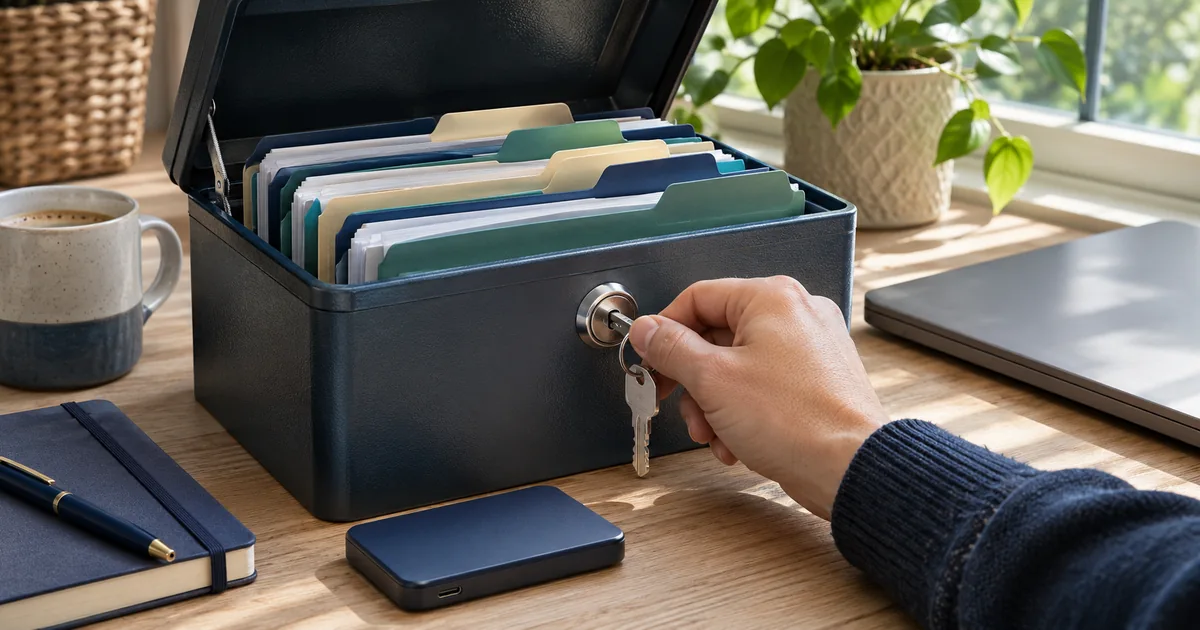
How to store W-2 documents securely
Maintain one protected folder per tax year. Include each original statement, any correction, and the final tax return. Save original and corrected forms separately so you can see which entries changed. Encrypt digital copies, use multi-factor authentication for cloud storage and keep a secure backup. Shred paper copies only when retention needs have ended. Avoid forwarding wage statements through unsecured email or storing them in public shared folders.
Review your Social Security earnings history periodically at the SSA account website. Keep evidence of discrepancies until corrected. If an old wage statement is missing, consult our lost W-2 recovery guide.
Frequently asked questions
Should I save a W-2 after I file taxes? Yes. It supports the figures reported on your return.
Does an IRS transcript replace my original statement? Not for all purposes; it lacks state and local W-2 details.
Should I keep an incorrect W-2 after receiving W-2c? Keep both with the related correspondence and tax return while they remain relevant.