
Do You Get Paid Extra on Labor Day? 2026 Holiday Pay and Overtime Rules
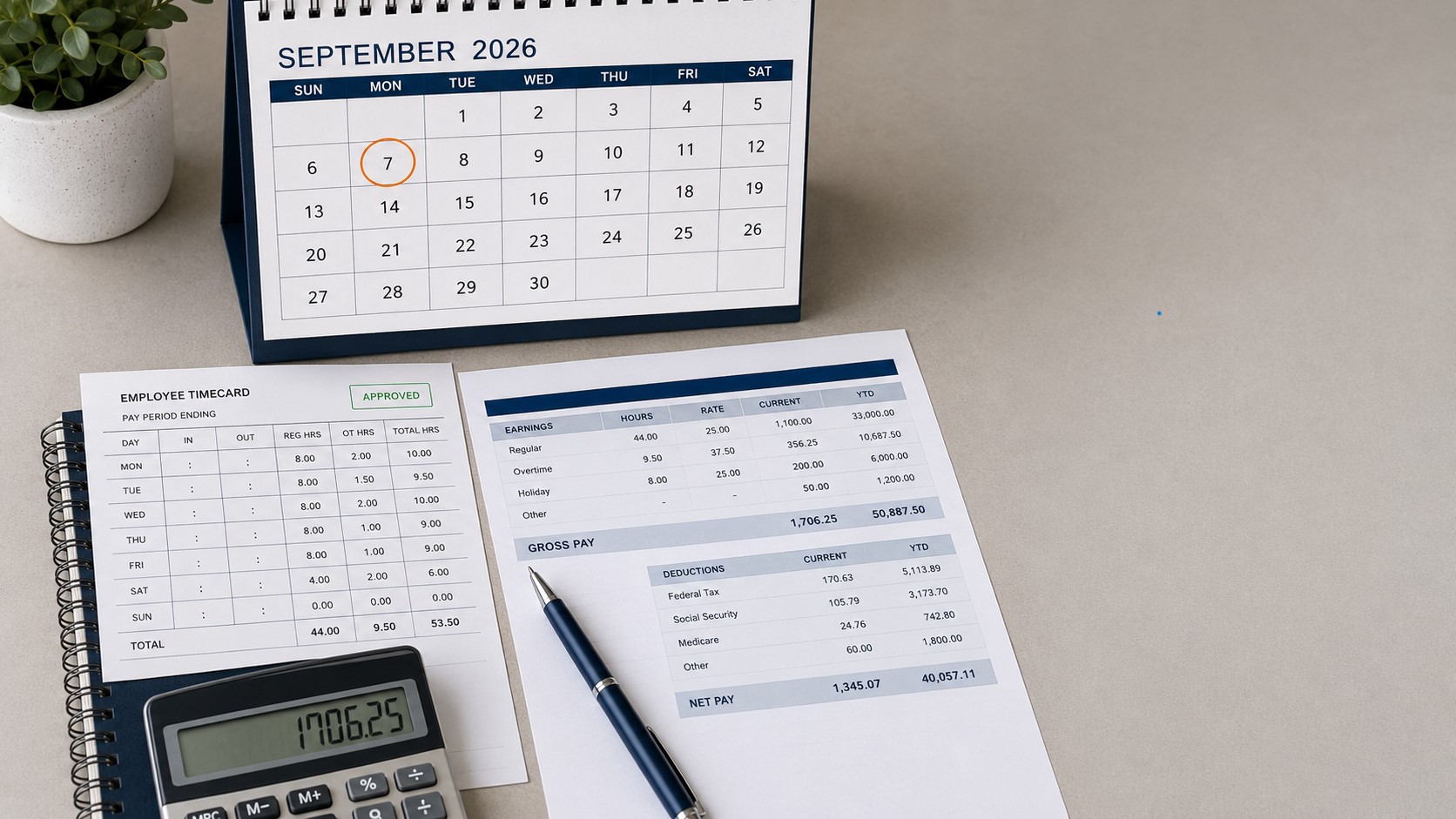
Labor Day does not automatically mean time-and-a-half or double pay. Labor Day is Monday, September 7, 2026. For most private-sector workers, federal law does not require paid time off or extra pay solely because the day is Labor Day.
You may still receive additional pay because you worked enough hours to trigger overtime, your employer promises a holiday premium, a union agreement applies, state law creates a separate rule, or you are covered by a different public-sector pay system.
The key is to identify which rule created the extra money. “Holiday pay,” “holiday premium” and “overtime” can all appear on the same paycheck, but they do not mean the same thing.
- Is Labor Day a paid holiday?
- Is the rate 1×, 1.5× or 2×?
- Time-and-a-half and double pay
- Holiday pay vs premium vs overtime
- Labor Day pay examples
- Do paid holiday hours count toward OT?
- Can holiday premium cover overtime?
- Salaried exempt employees
- Federal employees
- State rules
- Labor Day pay-stub audit
- What if the pay is wrong?
Is Labor Day a Paid Holiday in 2026?
Labor Day is a federal holiday, but that does not make it a universally paid holiday for private-sector employees.
The federal Fair Labor Standards Act does not require private employers to pay employees for holiday time they do not work. Paid holidays in the private sector usually come from an employer policy, employment agreement, collective-bargaining agreement or another applicable law.
That means two employees can both have September 7 off and receive different results:
- one employee may receive eight hours of paid holiday time;
- another may receive an unpaid day off;
- another may work Labor Day at the normal rate;
- another may receive a separate holiday premium.
Federal employees are different. Most covered federal employees are entitled to paid holiday time off under the federal holiday-pay system, and qualifying holiday work can trigger separate holiday premium pay. That rule does not apply automatically to private-sector workers.
Labor Day Pay Rate: Is It 1×, 1.5×, 2×, or More?
There is no single nationwide private-sector Labor Day rate.
The correct rate depends on your workweek, employee classification, employer policy, union agreement and state or other applicable law.
Do You Get Time-and-a-Half or Double Pay on Labor Day?
Not automatically under federal law.
For a covered nonexempt private-sector employee, the FLSA generally requires at least time-and-a-half after more than 40 hours actually worked in the workweek. It does not require extra pay merely because work occurred on Labor Day.
You might still receive:
- time-and-a-half because your employer's holiday policy promises it;
- time-and-a-half because a state rule applies;
- time-and-a-half because the hours are FLSA overtime;
- double time because an employer or union agreement promises 2×; or
- another result under a separate public-sector or contractual rule.
If your question is specifically whether ordinary overtime has become “double time,” see our separate guide to overtime vs. double-time rules in 2026.
Holiday Pay vs. Holiday Premium vs. Overtime
These terms are often used interchangeably, but payroll calculations are much easier to understand when they are separated.
| Term | What it means | What usually triggers it |
|---|---|---|
| Holiday pay | Compensation for holiday time, often even when the employee does not work. | Employer policy, agreement, CBA or other rule. |
| Holiday premium | Extra compensation because the employee actually worked on a holiday. | Employer policy, CBA, qualifying state law or another pay system. |
| Overtime pay | Premium required for qualifying overtime hours. | For most covered nonexempt workers under federal law, more than 40 hours actually worked in the workweek. |
Why this matters: getting eight hours of paid holiday leave does not automatically mean you worked eight overtime hours, and receiving a 1.5× holiday premium does not automatically mean another separate overtime premium must be stacked on top.
Which Labor Day Rule Applies to You?
Check whether your employer policy, contract or other applicable rule provides paid holiday hours. Federal private-sector law alone does not require payment for the unworked holiday.
Federal law does not automatically require a holiday premium. Check employer policy, a union agreement and state law.
A covered nonexempt employee generally has a federal overtime issue regardless of whether Labor Day caused the extra hours.
Check the exact multiplier, which hours qualify, eligibility conditions and how the premium interacts with overtime.
Salary-basis rules differ from hourly overtime rules. An employer closure does not automatically permit a one-day salary deduction.
Separate federal pay or contract wage-determination rules may apply.
Labor Day Pay Examples Using a $22 Hourly Rate
The examples below use the same base rate so that only the pay rule changes.
| Scenario | Calculation | Illustrative gross pay |
|---|---|---|
| 40 hours worked, including 8 on Labor Day; no premium policy | 40 × $22 | $880 |
| 32 regular hours + 8 Labor Day hours paid at 1.5× | (32 × $22) + (8 × $33) | $968 |
| 40 hours actually worked + 8 paid holiday hours not worked | (40 × $22) + (8 × $22) | $1,056 |
| 45 hours worked; no separate holiday premium | (40 × $22) + (5 × $33) | $1,045 |
| 40 other hours + 8 Labor Day hours paid at qualifying 1.5× holiday rate | (40 × $22) + (8 × $33) | $1,144, subject to the overtime/premium-credit rules explained below |
These are gross-pay illustrations. Taxes, deductions and other payroll items affect the final net deposit.
Do Paid Labor Day Hours Count Toward 40 Hours for Overtime?
Usually not under the federal FLSA when you did not actually work those holiday hours.
Suppose you receive eight paid Labor Day hours but actually work 40 other hours during the workweek.
Your payroll record may show:
- 40 worked hours; plus
- 8 paid holiday hours;
- 48 total paid hours.
But the federal overtime calculation generally still sees only 40 hours actually worked. The eight holiday hours you did not work do not automatically create eight overtime hours.
This is one reason employees sometimes see 48 paid hours but no OT line on the pay stub. The result can still change under state law, a union agreement or a more generous employer policy.
Can Holiday Premium Pay Count Toward Overtime?
Yes, in some circumstances.
Federal regular-rate rules allow certain genuine premiums for working on holidays, Saturdays, Sundays or regular days off to be excluded from the regular rate when the premium rate is at least 1.5 times the rate established in good faith for comparable nonovertime work.
The extra premium portion may also be credited toward FLSA overtime compensation due.
Example
Assume an employee earns $22 per hour, works 40 ordinary hours, and then works eight Labor Day hours under a genuine holiday policy paying 1.5×.
- 40 ordinary hours × $22 = $880
- 8 Labor Day hours × $33 = $264
- Total illustrative gross = $1,144
The additional holiday premium can potentially satisfy some or all of the federal overtime premium that would otherwise be due for those extra worked hours when the premium meets the federal requirements.
Do not automatically add “holiday 1.5× + overtime 1.5×” and assume 3× pay. Premium interaction is more technical than simple multiplication. Payroll should evaluate the entire workweek and the exact premium arrangement.
What About Salaried Exempt Employees on Labor Day?
A properly classified exempt employee paid on a salary basis generally must receive the full predetermined salary for any workweek in which the employee performs work, subject to limited permitted deductions.
If an employer closes the business for Labor Day and an exempt employee is ready and able to work but performs work during the rest of that week, the employer generally cannot simply deduct one day's salary because work was unavailable on Monday.
This is different from asking whether the employer must provide a separate holiday bonus or premium. Salary-basis protection does not itself create an additional 1.5× or 2× Labor Day payment.
What Do Federal Employees Get for Working on Labor Day?
Federal employees covered by the applicable Title 5 holiday-pay rules operate under a different system from private-sector workers.
Most covered federal employees who are excused from duty on a designated holiday receive their basic pay for qualifying holiday hours.
When a covered employee is required to perform qualifying holiday work during regularly scheduled non-overtime holiday hours, OPM states that the employee generally receives:
The rule is tied to qualifying holiday work and the employee's scheduled tour of duty. It should not be interpreted as a universal rule that every federal worker receives double pay for every hour worked around Labor Day.
State Rules Can Change the Labor Day Pay Result
Federal law is only the baseline. State rules can create different outcomes.
| State | Current lesson | Why it matters |
|---|---|---|
| Rhode Island | Covered Sunday and holiday work generally must be paid at least 1.5× the normal rate, subject to statutory exceptions. | A Rhode Island worker may have a holiday-premium right even when the FLSA alone would not create one. |
| California | California does not automatically require premium pay merely because work occurs on a holiday. | Normal California daily and weekly overtime rules can still create overtime. |
| Massachusetts | The former premium-pay requirement for certain retail Sunday and holiday work ended January 1, 2023. | Older articles may still incorrectly describe Massachusetts holiday premium pay as mandatory. |
These examples show why employees should check the law for the state where they work rather than assume a national holiday-pay rule applies everywhere.
Can an Employer Make Holiday Pay Conditional on Attendance?
Some employer policies condition paid-holiday eligibility on factors such as working the scheduled shift before or after the holiday, completing a minimum service period or maintaining a particular employment status.
If your Labor Day holiday pay disappeared after an absence, check:
- the written holiday-pay policy;
- whether approved PTO or protected leave is treated differently;
- your collective-bargaining agreement, if any;
- your employment agreement; and
- applicable state or local rules.
A company policy cannot override a stronger legal requirement that applies to the employee, but federal law generally does not create private-sector paid-holiday benefits on its own.
How Should Labor Day Pay Appear on Your Pay Stub?
Payroll labels vary by employer, so do not decide whether the pay is correct based on one code alone.
Audit the statement in this order:
| Possible line | What it may mean | What to verify |
|---|---|---|
| REG | Regular worked hours | Hours × normal rate |
| HOL / Holiday | Paid holiday leave, holiday-work earnings or an employer-defined holiday category | Were the hours actually worked or paid but not worked? |
| HOL PREM | Additional holiday premium | Eligible hours and multiplier |
| OT | Overtime earnings | Actual worked hours in the defined workweek |
| Current gross | This pay period's gross earnings | Compare against your reconstructed gross calculation |
| YTD | Cumulative annual amount | Do not mistake YTD for the Labor Day-period amount |
If the payroll abbreviations themselves are confusing, use our pay-stub abbreviations guide.
If your recorded Labor Day hours do not match what you actually worked, compare the timecard with your stub using Pay Stub Hours Don't Match Your Timecard?
What Should You Do If Labor Day Pay Looks Wrong?
- Save the original pay stub. Do not edit the employer-issued record.
- Save the timecard. Identify the exact hours worked during the workweek.
- Find the rule creating the extra pay. Check policy, CBA, contract or state source.
- Separate holiday leave from worked hours. This is critical for overtime.
- Recalculate gross earnings. Use each rate and eligible hour separately.
- Ask payroll what each code means. Especially HOL, HOL PREM and OT.
- Request a written correction if an amount required by the applicable rule is missing.
If the paycheck is lower than expected but the hours appear correct, see why a paycheck can be lower than expected.
What If Labor Day Falls Near Your Payday?
Labor Day is also a federal banking holiday, so a normal Monday payroll date can raise a separate question about ACH and direct-deposit timing.
That is a different search intent from holiday compensation. See our dedicated Labor Day 2026 paycheck and direct-deposit guide for early/late deposit timing.
Frequently Asked Questions
Labor Day is a federal holiday on Monday, September 7, 2026, but private-sector workers are not automatically entitled to paid time off under federal law. Paid holiday benefits commonly come from employer policy, contracts, collective-bargaining agreements or other applicable laws.
Not automatically under federal law. Time-and-a-half can apply because you worked enough hours to trigger overtime, because your employer or union agreement provides a holiday premium, or because an applicable state rule requires it.
Private-sector federal law does not create an automatic 2× Labor Day rule. Double pay can still result from an employer or union policy or another applicable pay system. Covered federal employees can receive 200% of basic pay for qualifying holiday work under OPM rules.
Generally not under the federal FLSA if you did not actually work those eight hours. Paid holiday time can increase total paid hours without increasing hours actually worked for federal overtime purposes.
Sometimes multiple forms of compensation apply, but they do not automatically stack by simply adding multipliers. A qualifying holiday-work premium can sometimes be credited toward federal overtime compensation due. The exact calculation depends on the premium and the full workweek.
Federal law generally does not make Labor Day a required day off for private-sector employees. State rules, collective-bargaining agreements, employment agreements and protected-leave or accommodation rules can change a specific situation.
Federal law does not automatically require paid Labor Day leave for private-sector part-time workers. Eligibility often depends on the employer's policy, agreement or another applicable rule.
A properly exempt salary-basis employee generally must receive the full predetermined salary for a week in which work is performed, subject to limited permitted deductions. An employer closure normally does not allow a salary deduction simply because work was unavailable that day.
HOL PREM commonly indicates a holiday-premium earnings line, but payroll codes are not standardized. Confirm the code with payroll and check the eligible hours and premium rate rather than relying only on the label.
Preparing Payroll After Labor Day?
After confirming the employee's actual hours, classification, written holiday policy and applicable overtime or state rules, an employer or authorized preparer can use ePaystubs to organize accurate payroll information into a current pay stub.
Create a Pay StubOfficial Sources Used for This Update
- U.S. Office of Personnel Management — 2026 Federal Holidays
- U.S. Department of Labor — FLSA Questions and Answers
- U.S. Department of Labor — FLSA Overtime Requirements
- U.S. Department of Labor — Regular Rate and Premium Payments
- U.S. Department of Labor — Salary Basis Requirement
- OPM — Federal Holidays, Work Schedules and Pay
- Rhode Island DLT — Legal Holidays
- California DIR — Holiday Pay
- Massachusetts — Wage and Holiday Premium Rules
Source review date: August 27, 2026.