
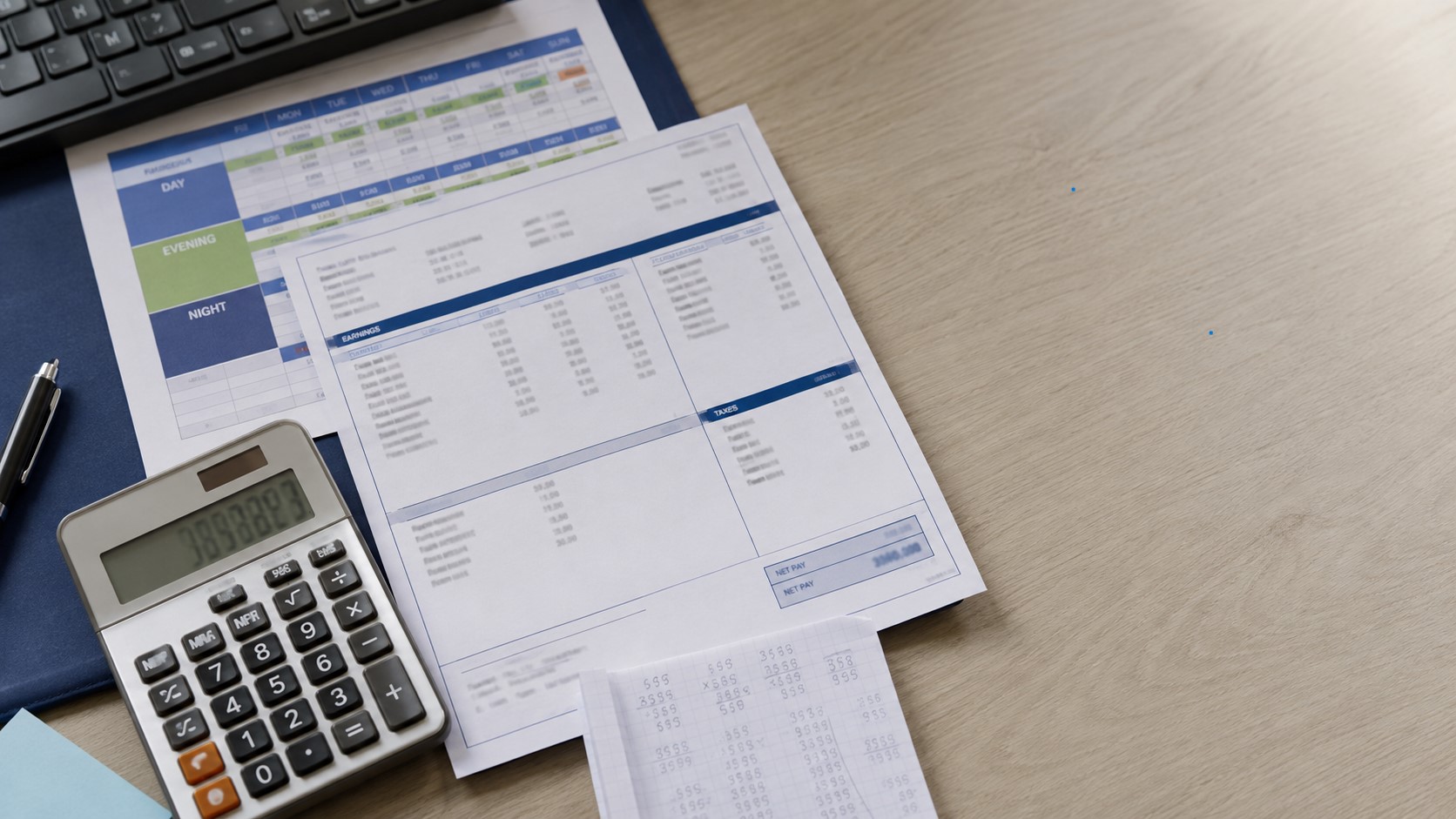
What Is Shift Differential Pay? Calculate Overtime and Check Your Pay Stub
Shift differential pay is extra compensation for working an eligible evening, overnight, weekend or other designated shift. The premium may be a flat amount, such as $2 for each qualifying hour, or a percentage of the employee’s base rate, such as 10%.
The basic calculation is usually straightforward. It becomes more complicated when an employee works a mixture of day and night hours, earns overtime or sees several unfamiliar earnings lines on a pay stub.
Multiply the eligible shift hours by the fixed premium or by the employee’s base rate and premium percentage. Add the result to straight-time earnings. For a covered, nonexempt employee who earns overtime, applicable shift differential will generally be included when calculating the workweek’s regular rate.
The Fair Labor Standards Act does not generally require extra pay merely because private-sector work occurs at night or on a weekend. A premium may instead come from an employer policy, contract, collective-bargaining agreement, government pay system or applicable state or local rule.
What Does Shift Differential Pay Mean?
What is differential pay? Differential pay is extra compensation added to an employee’s normal rate for qualifying work conditions or schedules. Night differential pay is a common example, where evening or overnight hours receive an additional flat-dollar or percentage premium.
A shift differential is an earnings premium connected to when an employee works. The employee still has a normal base rate, but qualifying hours earn an additional amount.
Employers may use the premium to cover:
- Evening or second shifts
- Overnight or third shifts
- Weekend schedules
- Designated holiday shifts
- Rotating or difficult-to-fill schedules
- Specific departments, locations or job classifications
A policy should explain which employees qualify, the eligible time window, whether the premium is flat or percentage-based and what happens when a shift crosses the start or end of that window.
What does DIFF mean on a pay stub?
DIFF commonly means differential pay. A shift premium may also appear as SHIFT, SHFT, NIGHT, NOC or PREM. These codes are not standardized across every employer or payroll platform.
| Pay-stub code | Common meaning | What to check |
|---|---|---|
| DIFF | Differential earnings | Eligible hours and premium rate |
| SHIFT or SHFT | Shift premium | Which scheduled shift qualified |
| NIGHT or NOC | Night-shift earnings | Policy time window |
| PREM | Premium pay | Whether it refers to shift, holiday or another premium |
| OT or OT1.5 | Overtime earnings | Hours and regular-rate calculation |
If a code is unclear, check the employer’s payroll legend or ask payroll what the line represents. The ePaystubs guide to pay-stub abbreviations and payroll codes can help with other entries.
Shift Differential Pay Versus Overtime
Shift differential and overtime can appear on the same paycheck, but they are not interchangeable. One is usually triggered by the scheduled time. The other is triggered by hours worked under the applicable overtime rule.
| Feature | Shift differential | Overtime |
|---|---|---|
| Trigger | Working an eligible shift | Working hours that qualify for overtime |
| General federal rule | Not required merely for private-sector night or weekend work | Generally required after 40 hours for covered, nonexempt employees |
| Rate | Fixed amount or percentage set by the applicable policy or agreement | At least 1.5 times the regular rate under the standard federal rule |
| Can both apply? | Yes | Yes |
| Common mistake | Leaving out eligible premium hours | Calculating overtime from base pay while ignoring includable premium earnings |
The Department of Labor explains that covered, nonexempt employees generally receive overtime after 40 hours in a workweek at not less than one and one-half times their regular rate. Saturday, Sunday or holiday work does not automatically become overtime unless the applicable hours threshold or another governing rule is met.
How to Calculate Shift Differential Pay
Shift Differential Pay Calculator
Use this shift differential pay calculator to estimate a flat-dollar or percentage premium, shift differential earnings, a basic federal regular-rate overtime amount, and estimated gross pay.
This calculator provides a basic federal regular-rate illustration for a covered, nonexempt employee. It assumes straight-time pay has already been paid for all workweek hours and uses 40 hours as the overtime threshold. State rules, employer policies, bonuses, multiple rates, excluded compensation, and other payroll rules can change the actual result.
For a 10% shift differential, choose Percentage and enter 10. A salary calculator with shift differential first needs the applicable hourly rate for the workweek. If you are estimating actual take-home pay, a paycheck calculator with shift differential must also account for taxes and other deductions.
Example 1: What does a $2 shift differential mean?
A $2 shift differential means the employee earns an additional $2 for each eligible hour. It does not normally mean that the employee receives only $2 for that hour.
Suppose the base rate is $20 per hour and the employee works 16 eligible night hours during a 40-hour week.
Shift premium: 16 × $2 = $32
Base earnings: 40 × $20 = $800
Total gross earnings before other additions: $800 + $32 = $832
Example 2: How much is a 10% shift differential?
First, multiply the base rate by 10%. Then multiply the resulting hourly premium by the number of eligible hours.
Using the same $20 base rate:
Premium per hour: $20 × 10% = $2
Premium for 16 hours: $2 × 16 = $32
Premium shift rate: $20 + $2 = $22 per hour
16 eligible hours × $2 = $32 additional earnings.
$20 × 10% × 16 hours = $32 additional earnings.
Example 3: The entire week is worked on the premium shift
If the employee works all 40 hours on a shift that pays a 10% premium, the effective straight-time rate is $22 per hour.
Total: 40 × $22 = $880
Example 4: Only part of the shift qualifies
Suppose an eight-hour shift runs from 6 p.m. to 2 a.m., but the employer’s policy pays an additional $2 only for hours between 10 p.m. and 6 a.m. Four hours fall inside that window.
Premium: 4 × $2 = $8
Do not apply the premium to all eight hours unless the written policy says the entire shift qualifies when part or most of it falls within the premium window.
How Shift Differential Affects Overtime
Should shift differential be included in overtime calculation? For a covered, nonexempt employee, an includable shift differential generally becomes part of the regular rate used to calculate federal overtime. For night differential overtime computation, the applicable premium can therefore increase both the regular rate and the overtime premium.
The federal regular rate is not always the same as an employee’s stated base rate. Under 29 CFR §778.109, the regular hourly rate is generally calculated by dividing includable workweek compensation by the hours worked for that compensation.
The Department of Labor’s healthcare overtime guidance specifically explains that shift differential pay must be considered when determining the regular rate.
Mixed day and night shift example
Assume an employee:
- Earns a $20 base hourly rate
- Works 48 hours in one workweek
- Earns a $2 shift differential for 16 hours
- Has already received straight-time pay for all 48 hours
- Qualifies for eight federal overtime hours
| Step | Calculation | Amount |
|---|---|---|
| Base earnings | 48 hours × $20 | $960.00 |
| Shift premium | 16 hours × $2 | $32.00 |
| Straight-time compensation | $960 + $32 | $992.00 |
| Regular rate | $992 ÷ 48 hours | $20.6667 |
| Additional half-time premium | $20.6667 × 0.5 × 8 hours | $82.67 |
| Total gross earnings | $992 + $82.67 | $1,074.67 |
Why is the last multiplier 0.5 instead of 1.5? The employee has already received straight-time earnings for every hour, including the eight overtime hours. The additional half-time premium brings those overtime hours to one and one-half times the calculated regular rate.
When an employee performs different work at two or more established non-overtime rates in one workweek, 29 CFR §778.115 describes a weighted-average method. Do not assume that the highest shift rate automatically becomes the regular rate for every hour.
Exemptions and special arrangements can change the method. Certain hospitals and residential care establishments, for example, may use an “8 and 80” overtime system when its legal requirements are satisfied. State law may also provide greater protection.
How Shift Differential May Appear on a Pay Stub
Payroll systems do not all display shift and overtime earnings in the same way. One system may show base earnings for every hour and place the additional overtime premium on a separate line. Another may separate regular hours from overtime hours and display a fuller overtime rate.
The labels can look different while the properly calculated gross total remains the same.
Display method 1: Straight time plus an additional overtime premium
| Pay-stub line | Hours or basis | Amount |
|---|---|---|
| REG | 48 × $20 | $960.00 |
| SHIFT DIFF | 16 × $2 | $32.00 |
| OT PREMIUM | 8 × $10.33335 | $82.67 |
| Gross earnings | All listed earnings | $1,074.67 |
Display method 2: Regular hours and overtime shown separately
Another payroll system may allocate the straight-time portion differently between regular and overtime lines. The exact rate labels and rounding can vary. The important test is whether the earnings lines reproduce the correct workweek compensation without paying or subtracting the same premium twice.
Confirm that you are reviewing the statement covering the correct work dates.
Compare the shift-premium hours with your schedule and approved timecard.
Check whether the policy promises a fixed amount, percentage or full premium rate.
Add regular, differential, overtime and other earnings before reviewing deductions.
Use current figures to check this paycheck; YTD is the accumulated total.
After taxes and employee deductions, confirm that net pay matches the payment received.
For a complete walkthrough, see how to read a pay stub. If the cumulative column is confusing, review the difference between current earnings and YTD totals.
Is Night Shift Differential Required?
For most private-sector employees, the FLSA does not create a universal right to extra pay solely because work takes place at night. The Department of Labor explains this in its official night-work guidance.
That does not mean an employer can ignore a valid premium commitment. Entitlement may come from a written employer policy, offer letter, employment agreement, collective-bargaining agreement or applicable state or local requirement.
| Worker group | General treatment | What to verify |
|---|---|---|
| Private-sector employee | No universal FLSA night premium | Employer policy, contract, union agreement and state rules |
| General Schedule federal employee | OPM describes qualifying night pay as a 10% differential | Scheduled hours and federal eligibility rules |
| Federal Wage System employee | OPM describes qualifying 7.5% and 10% night differentials | Shift window, majority-of-hours test and assignment |
| State or local government employee | Varies by jurisdiction and pay system | Agency policy, civil-service rules and agreement |
The federal-employee percentages above come from separate Office of Personnel Management rules. They should not be treated as standard private-sector night-shift rates.
Is Shift Differential Pay Taxed?
Shift differential earned for performing work is generally part of an employee’s wage compensation and increases gross earnings. Applicable federal, state and local withholding can therefore make the increase in net pay smaller than the gross premium.
For example, a $32 gross shift premium does not necessarily add exactly $32 to the employee’s deposit. The pay stub may also show changes in federal income tax withholding, Social Security, Medicare and applicable state or local withholding.
This ordinary shift premium should not be confused with the IRS term differential wage payments, which Publication 15 uses for certain payments involving employees serving in the uniformed services.
Read gross pay versus net pay to see how earnings become take-home pay.
What to Do If Your Shift Differential Looks Wrong
- Match the hours. Compare your schedule, clock records and the hours shown on the pay stub.
- Read the policy. Confirm the qualifying shift window, eligible role and promised premium.
- Calculate the premium. Use the flat-dollar or percentage formula.
- Check overtime. If you worked overtime, determine whether applicable differential earnings were included in the regular rate.
- Reconcile gross pay. Add all current earnings and avoid mixing current amounts with YTD totals.
- Contact payroll in writing. Identify the pay date, hours, expected premium and amount you cannot reconcile.
“My pay stub dated [date] shows [number] eligible evening or night hours. The written policy appears to provide a [percentage or dollar] shift differential, but I cannot reconcile the DIFF and overtime earnings. Please confirm the eligible hours, premium rate, regular-rate calculation and whether a correction is needed.”
Save the schedule, approved timecard, pay policy, pay stub and payroll response. If payroll confirms that an earlier paycheck was too low, the correction may appear as an adjustment or retro pay.
Do not edit, replace or backdate an authentic employer-issued pay stub. A legitimate correction should preserve the earlier record and clearly document the added or corrected wages.
Employers documenting genuine current payroll information can use our paystub creator to create a pay stub that separates regular earnings, shift premiums, overtime and deductions. A generator cannot retrieve an original document from an employer or make inaccurate information valid.
Frequently Asked Questions
Shift differential pay is additional compensation for working an eligible shift, such as an evening, overnight or weekend schedule. It may be a fixed amount per hour or a percentage of the employee’s base rate.
It usually means the employee earns an additional $2 for every hour that qualifies under the shift policy. Sixteen eligible hours would produce $32 in additional gross earnings.
Multiply the base rate by 10%. For an employee earning $20 per hour, the premium is $2 per eligible hour and the premium shift rate is $22 per hour.
For a covered, nonexempt employee, applicable shift differential earnings will generally be included when determining the regular rate used for federal overtime. Exclusions, exemptions and special methods can affect a specific calculation.
No. Shift differential is connected to when an eligible shift is worked. Overtime is connected to the number of qualifying hours. An employee can earn both during the same workweek.
DIFF commonly means differential earnings, often a shift premium. Check the earnings section and employer code legend because abbreviations vary between payroll systems.
The FLSA does not generally require extra pay merely because private-sector work occurs at night. An employer policy, contract, union agreement, government pay rule or state requirement may still create an entitlement.
The shift premium increases gross earnings, while applicable employee taxes and deductions affect the amount deposited. Compare current gross earnings, current deductions and current net pay rather than using the YTD column.
Official Sources
- U.S. Department of Labor: Night Work and Shift Work
- U.S. Department of Labor Fact Sheet 56A: Regular Rate of Pay
- U.S. Department of Labor Fact Sheet 23: Overtime Pay Requirements
- U.S. Department of Labor Fact Sheet 54: Healthcare Overtime
- U.S. Department of Labor: FLSA Overtime Calculator Advisor
- 29 CFR §778.109: The Regular Rate Is an Hourly Rate
- 29 CFR §778.115: Employees Working at Two or More Rates
- Office of Personnel Management: Night Pay for General Schedule Employees
- Office of Personnel Management: Federal Wage System Night Shift Differential
This article provides general educational information, not legal, tax, accounting or payroll advice. Overtime coverage, exemptions, state laws, contracts, collective-bargaining agreements and employer policies can change the correct calculation. Employees should confirm unclear earnings with payroll, and employers should obtain qualified guidance for specific payroll decisions.